TL;DR
Standing water in a shower tray or a slow-draining basin is almost always hair, soap scum and skin cells caught in the trap just below the plughole, and it usually clears with a simple hair-removal tool or a trap clean rather than anything more drastic. Avoid chemical drain cleaners in a shower tray — they sit in the standing water rather than draining away, which makes them more likely to damage the tray finish than to actually help. If the slow drainage spreads to other fixtures, or a basement or lower-ground bathroom's macerator starts struggling at the same time, the cause is probably further down the system. Request a quote online if a straightforward trap clean doesn't fix it.
Where Shower and Bathroom Drains Actually Block
Nearly all shower and bathroom basin blockages start in the same place: the trap directly beneath the plughole, where hair, soap scum, shed skin and hard-water scale combine into a solid mat that slows drainage to a crawl. Compact bathrooms — common in Brighton's converted flats, seafront properties and period terraces — often have tighter, more sharply angled waste runs than a modern new-build, which gives debris more surfaces to catch on before it can clear the trap.
Clearing a Trap Safely
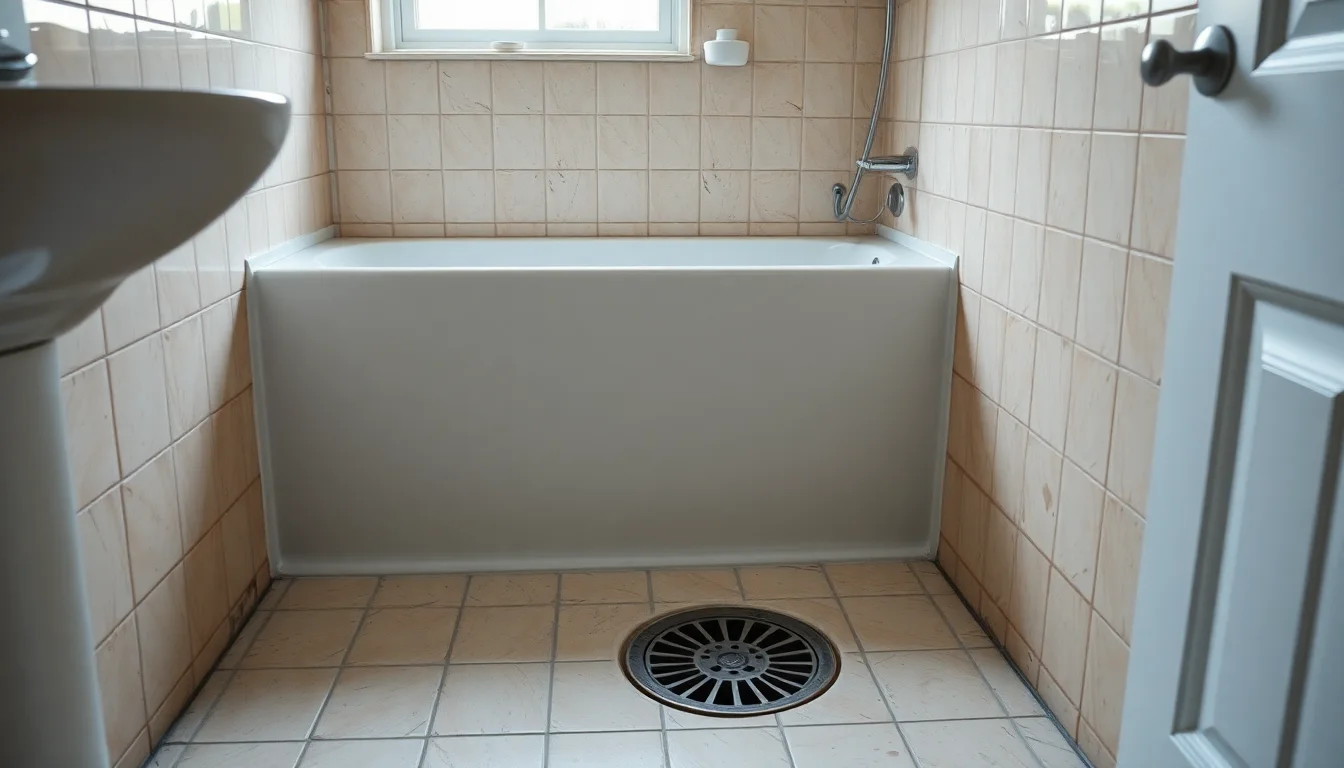
Most shower trays have a removable cover or grate over the trap — lift it and clear visible hair and debris by hand first, wearing gloves. A plastic hair-removal tool (a flexible barbed strip, widely available and inexpensive) pushed a short way into the waste pipe and drawn back out is usually enough to pull the rest of the clog free. For a basin, the same tool works through the plughole, or the U-bend trap underneath can be unscrewed over a bucket and cleaned directly if it's accessible.
Avoid pouring chemical drain cleaner into a shower tray that's already holding standing water — the chemical sits in the tray rather than working its way into the trap, which mostly just risks the tray's finish and any silicone sealant around it without clearing anything. A kettle of hot (not boiling) water flushed through afterwards helps clear any remaining soap residue once the physical blockage is out.
Why Brighton's Compact Bathrooms Block More Often
Two things push shower and bathroom drain blockages up in Brighton and Hove specifically. Hard water across the area accelerates scale build-up inside traps and waste pipes, giving hair and soap residue more to cling to than it would in a soft-water area. And the borough's stock of converted Regency terraces and basement flats often means bathroom waste runs were retrofitted into buildings never designed for them — narrower pipe diameters, tighter bends, and in many lower-ground and basement conversions, a saniflo or macerator unit rather than gravity drainage, because there's no fall available to a street-level sewer.
When It's the Branch, Not the Trap
If clearing the trap makes no difference, or the shower drains fine on its own but backs up whenever the toilet or another fixture is used at the same time, the blockage has likely moved past the trap into the shared branch pipe serving the bathroom. That's a sign the fix needs to go further than the plughole — treat it as a blocked drain issue rather than repeating trap cleans that won't reach it.
In basement and lower-ground bathrooms specifically, watch for a saniflo unit that's humming, tripping, or struggling to clear the shower waste at the same time drainage is slow — macerator units are more sensitive to downstream restrictions than standard gravity drainage, so a struggling unit alongside a slow shower is often the same underlying problem showing up in two places at once, not two separate faults.
Preventing the Next Blockage
A cheap plastic hair-catcher sitting over the plughole stops most future blockages before they start, and it takes seconds to lift out and empty after a shower. Wiping down the tray and clearing any visible hair once a week, rather than only when drainage slows, keeps the trap from building up the dense mat that eventually needs a proper clean-out. In hard-water areas like Brighton and Hove, an occasional descale of the trap and overflow — using a product made for the job rather than a generic chemical drain cleaner — also helps keep scale from giving hair and soap scum something to grip onto in the first place.
FAQs
Is it safe to use chemical drain cleaner in a shower tray? We'd avoid it, particularly if there's already standing water — the chemical tends to sit in the tray rather than reach the trap, and can damage the tray finish and surrounding silicone without clearing the blockage.
Why does my shower drain block more than my bathroom sink? Hair is the main reason. Showers collect far more hair than a hand basin, and combined with soap scum and hard-water scale, it forms a denser blockage in the trap.
Could a struggling saniflo unit be linked to a blocked shower drain? Yes, particularly in basement or lower-ground flats. A macerator that's humming or tripping at the same time a nearby shower or basin drains slowly can point to a shared restriction further down the system rather than two unrelated faults.
How often should I clean a shower trap to avoid blockages? There's no fixed rule, but clearing visible hair after each shower and giving the trap a proper clean every few weeks noticeably reduces how often a full blockage builds up, especially in hard-water areas like Brighton and Hove.
If a trap clean hasn't fixed a slow or blocked shower or bathroom drain, or you're dealing with a struggling saniflo unit alongside it, request a quote online and describe what you're seeing. We also cover bathroom drainage and saniflo issues for homes further along the coast in Worthing.