TL;DR
A homebuyer drainage survey looks at exactly the thing a standard building survey never touches: the underground pipework. That matters across Brighton and Hove, Worthing and Shoreham-by-Sea, where a lot of the housing stock is Victorian, Edwardian or Regency-era and has been extended or converted more than once since. A CCTV-based survey can reveal a hidden defect, clarify who’s actually responsible for what, and give you something concrete to raise before you exchange rather than discover after. Get in touch online to arrange one ahead of a purchase.
Why older Sussex housing stock needs a dedicated drainage check
A standard homebuyer or building survey is a visual inspection — roof, walls, windows, damp, general condition — of whatever’s actually accessible without digging. It never goes near the drains, because doing so isn’t part of the brief, which means whatever’s happening underground stays completely invisible to a buyer relying on that report alone.
That gap matters more in this part of the Sussex coast than in a newer estate elsewhere, simply because so much of the stock here predates modern drainage standards, and decades of loft conversions, extensions and re-plumbed bathrooms have often been tied into the original pipework in whatever way was convenient at the time rather than to a consistent plan. Since 1 October 2011, responsibility for most private sewers and lateral drains — the pipe running from a property boundary to the public sewer — transferred to the regional water company, which for this stretch of coast is Southern Water. Sections that remain private, such as drainage serving only one property, stay the owner’s responsibility, and a standard survey won’t tell you which is which. A dedicated drainage survey fills exactly that gap before you’re committed.
What the survey actually involves
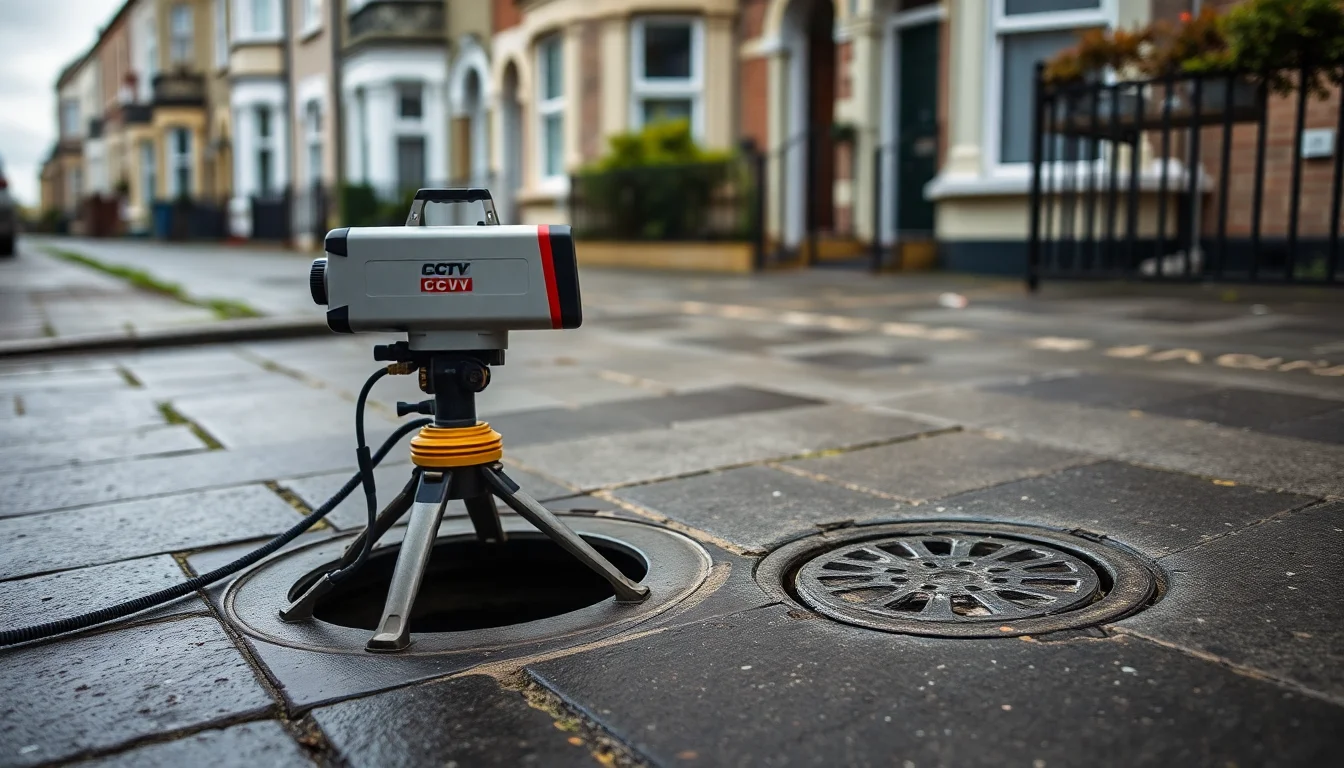
A homebuyer drainage survey uses a waterproof CCTV camera fed into the drain through an existing manhole or inspection chamber, recording footage of the pipe’s interior as it goes — cracks, displaced joints, root ingress, restrictions, or general corrosion. The footage is then assessed against the WRc MSCC5 drain-condition classification standard used across the UK drainage industry, which grades any defects found from minor to structural, giving a consistent way to judge how urgent anything found actually is.
Alongside the defect grading, the survey produces a drain map showing pipe direction, material — commonly vitrified clay or pitch fibre in older Sussex properties, sometimes patched with more recent PVC sections — and the location of chambers, plus notes on anything relevant to shared drainage or build-over. The result is a factual report your solicitor or conveyancer can actually use to raise the right questions before exchange, rather than a vague verbal impression from the day of viewing.
Build-over agreements and shared-drain gotchas
Older terraces and converted properties across Brighton, Worthing and the villages around them frequently have drains running underneath later additions — an extension, a conservatory, a garage. If one of those was built directly over a drain without a formal build-over agreement from Southern Water, that’s an unresolved compliance issue that transfers to whoever owns the property next, not just the person who built it.
Without an agreement in place, a homeowner can end up liable for the cost of altering or removing part of the structure if the water company genuinely needs access to the pipe for repair or maintenance later. A survey showing physical signs of a build-over — concrete encasing the pipe, or a slab edge sitting directly on top of it — gives you grounds to ask the seller whether it was ever formally agreed, and to get that answered before you exchange rather than after you’ve moved in.
Shared drainage is the other common trap. A lot of older Sussex terraces run a single lateral drain serving several neighbouring houses before it reaches the public sewer, and working out whether a specific run is private or already adopted isn’t always obvious once original plans have been lost or altered over the years. A survey identifies where shared sections exist and flags anywhere the adoption status looks unclear, which is exactly the kind of thing worth clarifying with a seller before you’re the one who owns the problem.
A brief word on Worthing, Lancing and Shoreham-by-Sea
Worthing, just along the coast from Brighton, has a substantial stretch of late-Victorian and Edwardian terraces around the town centre and seafront, built to the drainage standards of their time and since patched and extended in places. Lancing mixes older cottages around the village centre with a good deal of 1930s semi-detached housing, sitting on the coastal plain between the Downs and the sea. Shoreham-by-Sea, straddling the River Adur, has its own mix of older housing near the harbour alongside more recent development further back from the water.
None of that changes the basic principle: wherever the building predates modern drainage design, or has been extended and re-plumbed more than once, a standard viewing tells you nothing about what’s actually happening underground — which is the entire reason a dedicated survey is worth having done before you commit, rather than assuming it’s fine because the taps run and the toilet flushes.
Making sense of the results
Once you have the report, focus on the defect grading and anything noted about ownership or build-over status. Minor findings are often fine to simply monitor rather than act on immediately. More significant defects tend to mean budgeting for repair or relining before too long, and it’s entirely reasonable to get a quote for that work before you exchange, so you know what you’re actually taking on. A serious finding — a collapsed section, or a major root mass restricting flow — is the kind of thing worth raising directly with the seller, whether that means negotiating on price or asking for it to be fixed before completion.
If the report shows an unadopted drain running under an existing extension with no record of a build-over agreement, that’s worth checking with Southern Water directly before you commit — it may need a retrospective agreement, or in rarer cases, some adjustment to the structure itself. Either way, having this in hand before exchange means your solicitor is working from facts rather than assumptions, and you get to decide whether to proceed, renegotiate, or walk away with your eyes open. If you’re buying anywhere along this stretch of the Sussex coast and want a survey arranged before exchange, get in touch online.
Frequently Asked Questions
Do I really need a separate drainage survey if I’m already getting a full building survey? Yes, if the property is older or has been extended — a standard building or homebuyer survey doesn’t inspect underground drainage at all, so it’s a genuine gap rather than something covered by another route.
What’s the difference between a private drain and an adopted sewer? An adopted sewer or lateral drain is maintained by the regional water company — Southern Water in this area — following the 2011 transfer of most private sewers. Anything that remains private, typically pipework serving only your own property, stays the owner’s responsibility to maintain and repair.
What happens if the survey finds an unauthorised build-over? It’s worth raising with the seller before exchange and, separately, checking with Southern Water about regularising it. Left unresolved, the liability for altering or removing the structure if access is ever needed can fall to whoever owns the property at the time.
Can I use the survey report to negotiate on price? Often, yes. A documented defect with a clear severity grading gives you a factual basis to ask the seller to fix it before completion, or to negotiate the price to reflect the cost of the work — rather than relying on a vague verbal concern.