TL;DR
A CCTV drain survey feeds a waterproof camera through the drainage system to show exactly what’s happening inside the pipe — cracks, root ingress, displaced joints, and any sign that something has been built over a drain without agreement. It matters most when a blockage keeps coming back, when damp keeps appearing near a drain run, or when you’re buying an older property in Brighton and Hove and want to know what you’re taking on. If any of that sounds familiar, get in touch online and we’ll talk through whether a survey is the right next step.
What the camera actually finds
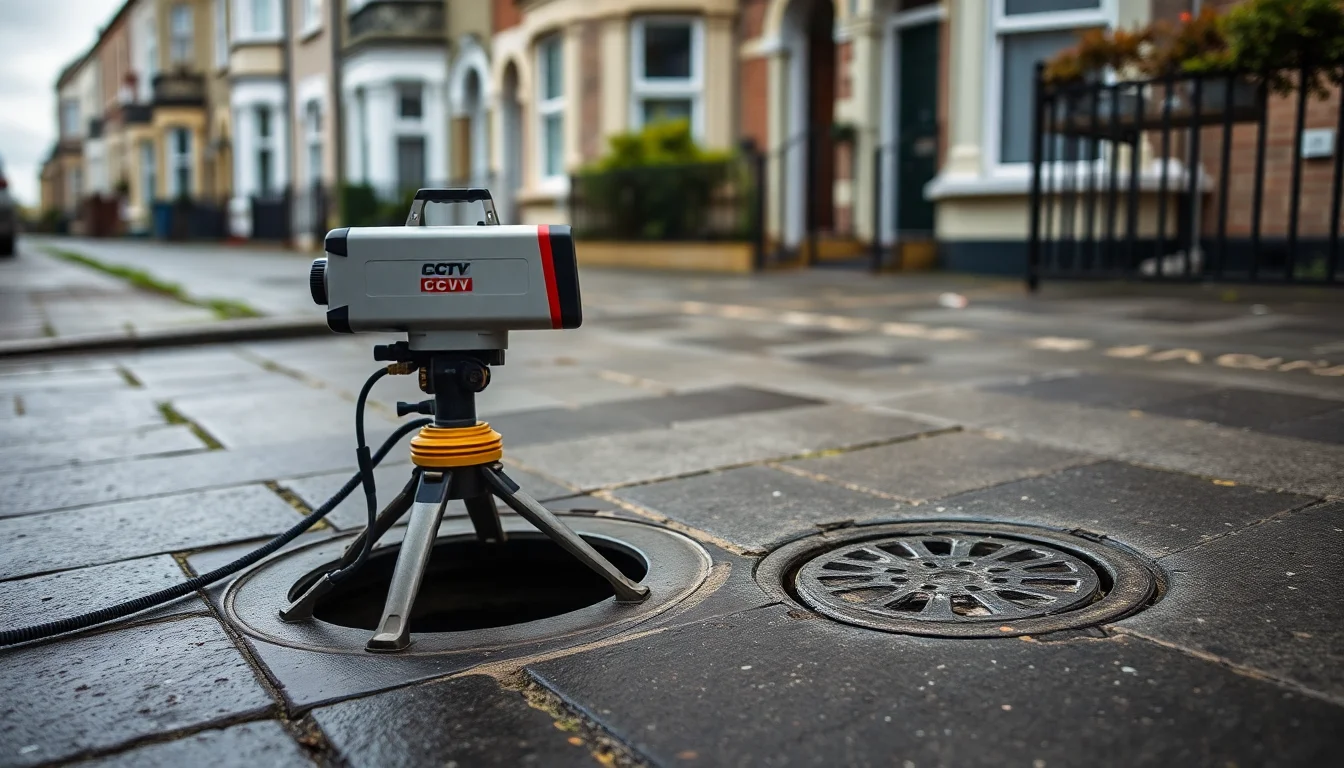
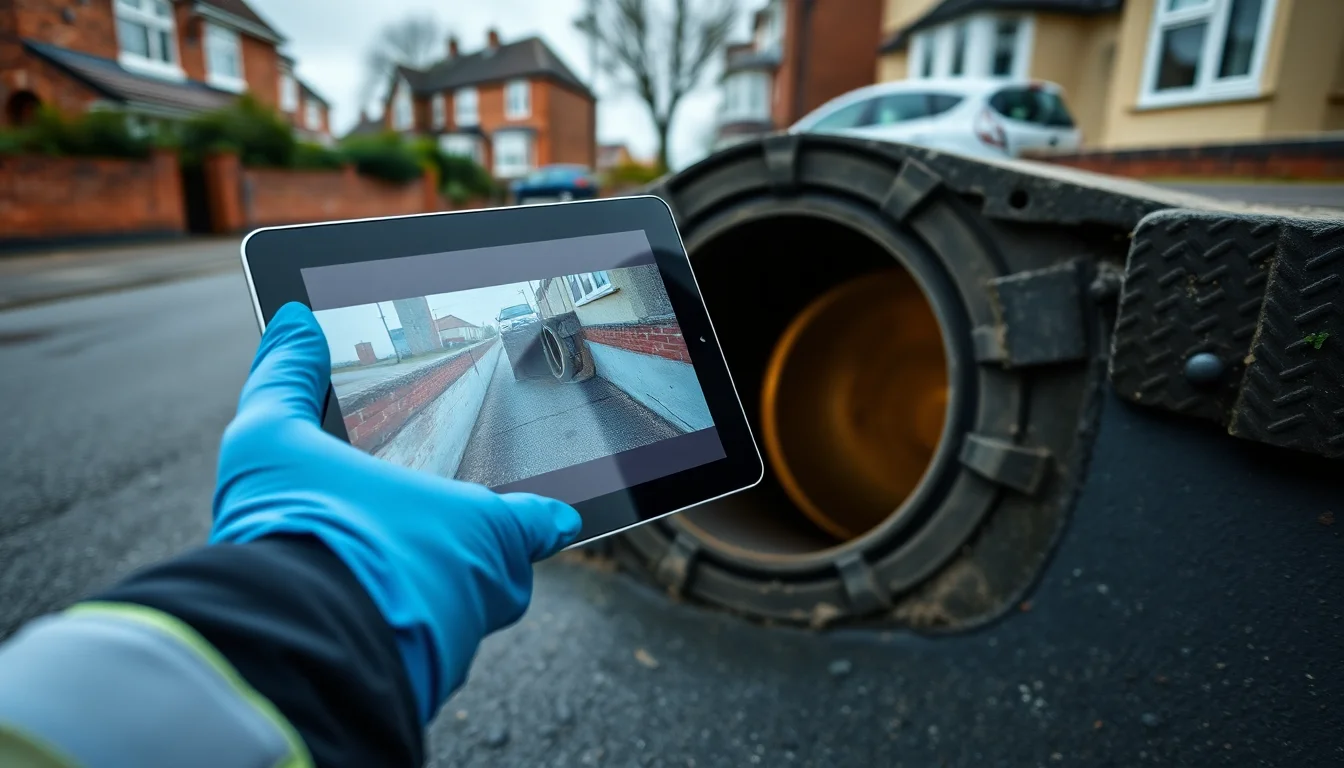
A CCTV drain survey uses a flexible, waterproof camera fed through an existing access point — usually a manhole, inspection chamber, or rodding eye — so nothing needs to be dug up just to have a look. As the camera travels down the pipe, an engineer watches a live feed and records footage of the full run, checking for:
- Cracks and fractures in the pipe wall, which let water escape or let soil and roots in
- Root ingress, where fine tree roots have found their way through a joint or crack, often growing into a dense mat that catches everything else flowing past
- Displaced or open joints, where sections of pipe have shifted out of alignment, creating a step that traps debris
- Deformed or collapsed sections, usually from ground movement or age, where the pipe has lost its original round shape
- Signs of build-over — concrete, a slab edge, or an altered pipe run suggesting an extension, patio or driveway was built directly over the drain without the water company’s agreement
Because the footage is continuous and recorded, an engineer can pause on anything unclear, measure a defect’s exact position, and compare pipe material and condition along the whole run rather than guessing from the surface.
The symptoms that usually lead someone to book one
Most people who ask about a CCTV drain survey aren’t doing it out of curiosity — something has already gone wrong more than once. The most common triggers are a blockage that clears with rodding or jetting but returns within weeks, a damp patch on a wall, ceiling or patch of garden that keeps reappearing near a known drain run, and a persistent bad smell around a gully or manhole that never quite goes away. Each of these is a symptom of something structural rather than a one-off — a sagging pipe holding standing water, a cracked joint letting soil in, or a partial collapse narrowing the bore — and a camera is the only realistic way to see which one you’re actually dealing with rather than paying to clear the same blocked drain every few months.
The same logic applies to a suspected leak that won’t reveal itself above ground. If water is disappearing somewhere and nothing visible explains it, tracing the drain run on camera is usually faster and less disruptive than opening up floors or walls on a guess. If you’re trying to work out who should be dealing with a recurring blockage in the first place, the answer usually turns on where the pipe sits: drainage serving only your own property, inside your boundary, remains your responsibility, while most lateral drains and shared sewers beyond the boundary passed to Southern Water in 2011. A survey is often what settles which side of that line a particular run falls on.
Homebuyers and build-over agreements
Brighton and Hove’s housing stock is heavy on converted Regency and Victorian terraces, and a standard homebuyer or building survey never goes near the drains — it’s a visual inspection of the parts of the property that are actually visible. Whatever’s happening underground stays invisible until it becomes a problem, which is exactly why a CCTV survey before exchange is worth considering on an older purchase.
Since 1 October 2011, responsibility for most private sewers and lateral drains — the pipe running from a property’s boundary out to the public sewer — transferred to the regional water company, which for Brighton and Hove means Southern Water. Anything built over that lateral drain without a formal build-over agreement in place is a compliance issue that can resurface at the worst possible time, sometimes only when Southern Water needs access for repair or maintenance and finds a conservatory or driveway in the way. A survey will show whether a build-over exists and give a buyer’s solicitor something concrete to raise before contracts are exchanged, rather than after.
What the written report and drain map contain
A proper survey doesn’t end with the footage. The written report that follows typically includes a pipe schedule showing the material, diameter and length of each run inspected; a defect log describing each issue found, its position, and its severity, usually graded against the WRc MSCC5 classification system used across the UK drainage industry; and a drain map — a schematic showing the layout, direction of flow, and the position of manholes and any defects relative to the property. Where relevant, the report will also note anything spotted regarding build-over status or shared drainage with a neighbouring property.
Written this way, the report is something a solicitor, mortgage lender, insurer or Southern Water can act on directly, rather than a vague description of "some root problem near the back wall." If you’d like to talk through whether your situation calls for a survey, get in touch online and describe what you’ve noticed — we’ll advise honestly on whether it’s worth doing.
Frequently Asked Questions
How is a CCTV drain survey actually carried out? A waterproof camera on a flexible rod is fed into the drain through an existing manhole, inspection chamber or rodding eye, so there’s normally no digging involved just to inspect the pipe. The engineer watches the live feed, records the full run, and notes anything of concern as it appears.
Can a drain survey tell me if a drain has been built over without permission? Yes — signs of build-over, such as concrete encasing the pipe or a slab edge sitting directly on top of it, are usually visible on the footage. If there’s no record of a formal agreement with Southern Water for that build-over, that’s worth raising before you complete a purchase.
Is a CCTV survey the same as a normal homebuyer survey? No. A standard homebuyer or building survey looks at the visible, accessible parts of a property. It doesn’t inspect underground drainage at all, which is exactly why a separate CCTV drain survey is worth commissioning on an older property.
Will a survey tell me why my drain keeps blocking? In most cases, yes. If the same drain clears with rodding or jetting but blocks again within weeks, the camera usually shows why — root ingress, a sagging section holding standing water, or a partial collapse narrowing the pipe — so the actual cause can be dealt with rather than just the symptom.